
Chicken Road Game UK – How It Works, How to Play, and What to Know Before You Bet
The Chicken Road game has become one of the more distinctive instant-play titles to appear in online casino lobbies. At first glance, the idea looks almost too simple to hold attention for long: guide a chicken forward, step by step, and decide when to stop before a hidden danger ends the round. In reality, that simplicity is exactly what makes the game work. It creates a very direct relationship between risk and reward, and it does so without the clutter that often comes with reels, paylines, and oversized feature lists.
For UK players, that matters. The market is crowded with games that promise complexity, bonus layers, and “immersive” mechanics, but not all of them are genuinely engaging. Chicken Road goes the other way. It removes the unnecessary parts and leaves you with one core decision repeated under pressure: do you bank the current value or push forward for more? That makes the game feel fast, transparent, and easy to understand even if you have never touched a crash-style or instant-win title before.
Chicken Road launched on 4 April 2024, is presented as a single-player title, and runs with an advertised 98% RTP. Official material also highlights four difficulty settings and browser/mobile compatibility through HTML5-style delivery. InOut has separately stated that Chicken Road outcomes are generated by certified random systems and that so-called hack or bot claims are misleading.
This guide explains what the Chicken Road game actually is, how it works in practice, what the different difficulty levels mean, how demo play helps, and what UK players should keep in mind before looking for a real-money operator.
What Is the Chicken Road Game?
The Chicken Road game is an instant, step-based risk title built around a very straightforward premise. You begin the round with a stake and a chicken positioned at the start of a dangerous route. Every safe step increases the potential payout. Every additional step also increases the chance that the run ends badly. That balance between progress and danger is the entire game.
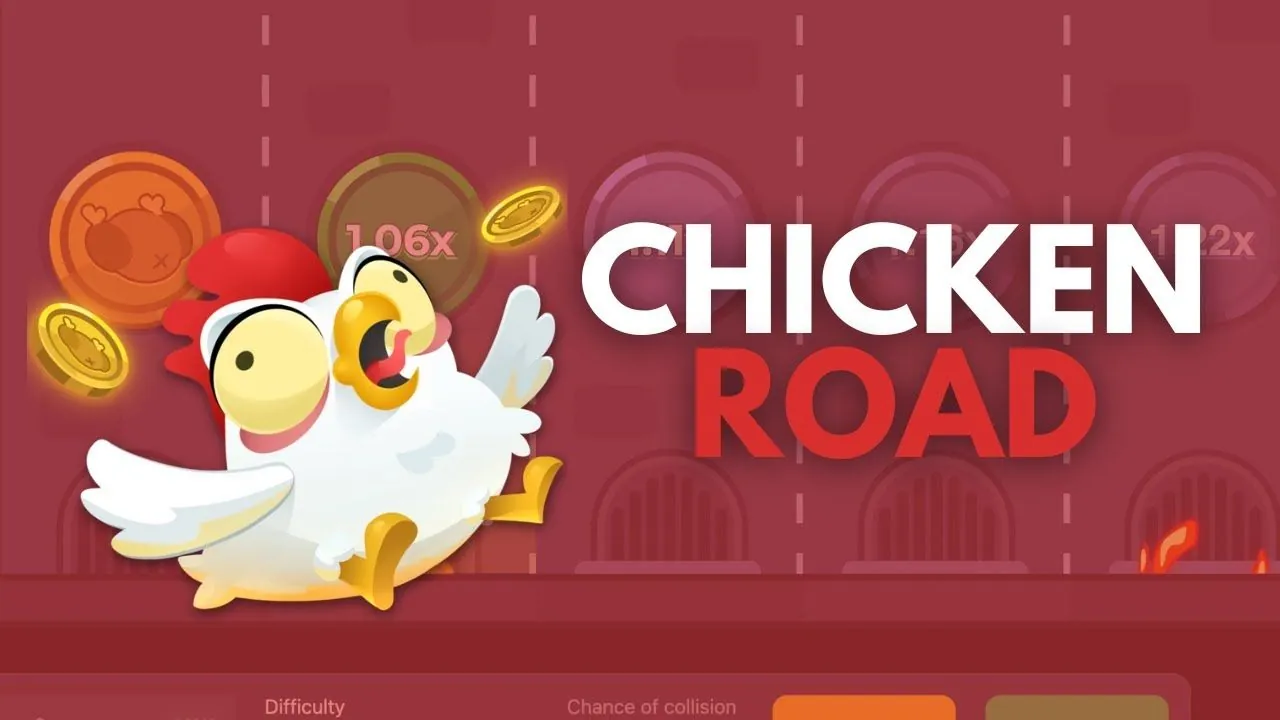
That is why Chicken Road is often discussed alongside crash games, even though it feels slightly different in play. In a typical crash title, the multiplier rises automatically while the player waits to cash out. In Chicken Road, the progression is more deliberate: the round moves forward one decision at a time. Instead of watching a number race upwards on its own, you actively choose whether to continue. That small difference changes the rhythm of the game quite a lot. It feels less passive and more personal, even though the outcomes are still random.
Official InOut material describes Chicken Road as a title with four difficulty settings and a progressive risk structure in which each level raises both the danger and the potential reward. That aligns with how players experience it in practice: the entire point is not simply to “go as far as possible”, but to judge when enough is enough.
Chicken Road at a Glance
If you want the basic facts before diving into the details, the official product pages are the clearest starting point.
| Feature | Details |
|---|---|
| Game title | Chicken Road |
| Developer | InOut Games |
| Release date | 4 April 2024 |
| Format | Single-player instant/step-based game |
| RTP | 98% |
| Difficulty levels | Easy, Medium, Hard, Hardcore |
| Technology | Web/mobile compatible game delivery |
| Devices | Desktop, Android, iOS |
Official sources do not present a single fixed UK-facing bet range in GBP, and operator setups may differ. If you intend to play for real money, the exact minimum and maximum stake should always be checked inside the operator’s game lobby before you deposit.
How the Chicken Road Game Works
The mechanics are deliberately simple, but there is still more structure here than first appears.
You start by selecting a stake. After that, you choose a difficulty level. Once the round begins, the chicken advances step by step. After each successful move, you can either stop and take the current value or continue. If the next step lands on a losing outcome, the round ends and the stake is gone.

That is the whole system, and the game relies on that simplicity. It does not ask you to memorise paytables or track multiple simultaneous features. Instead, it puts nearly all of the tension into one repeated choice. The crucial part is that the game is not “skill-based” in the strict sense. Your timing and discipline matter, but you are not controlling trap placement or steering the chicken away from known danger. InOut’s own wording around certified random systems makes that clear: outcomes are random, and each round is independent.
A Typical Round, Step by Step
A round usually follows this pattern:
Step 1
You set your stake.
Step 2
You choose the difficulty level.
Step 3
The round starts and the chicken moves forward.
Step 4
After each safe step, the multiplier increases.
Step 5
You decide whether to cash out or continue.
Step 6
If you keep going and the next step fails, the stake is lost.
The reason this structure works so well is psychological. You are not waiting long enough for boredom to set in, but the space between each decision is just long enough to create doubt. That is where the game gets its energy.
Difficulty Levels and What They Really Change
Official InOut pages clearly state that Chicken Road offers four difficulty settings: easy, medium, hard, and hardcore. Each higher level increases the possible winning odds while also increasing the danger.
For players, that matters more than almost any other setting, because difficulty is effectively the game’s volatility dial.
Easy
Easy mode is the most forgiving option and the best place to start if you are completely new. The pace is calmer, the pressure builds more gradually, and the goal is to help you understand how the game feels over repeated rounds. You are still gambling, of course, but the session tends to feel less punishing than harder modes.
Medium
Medium sits where many players will likely settle once they understand the basics. It creates more tension than Easy without immediately turning every round into a high-wire act. If you want a version of the Chicken Road game that still feels manageable but has clearer upside, this is the logical middle ground.
Hard
Hard mode shifts the balance noticeably towards volatility. The potential value climbs faster, but the margin for error feels much thinner. This level suits players who already understand the game’s rhythm and are comfortable accepting more losing rounds in exchange for stronger payout potential.
Hardcore
Hardcore is where the game becomes genuinely severe. It is the version most likely to appeal to players who enjoy aggressive risk and the idea of rare, outsized results. For most people, it is not the best place to begin. If you jump straight into Hardcore without understanding the tempo of the game, it will probably feel brutal rather than exciting.
Why Chicken Road Feels Different from a Standard Slot
Competitor pages often try to force Chicken Road into the language of slots, but that comparison only goes so far. A slot is usually built around passive spins: you set the stake, spin the reels, and wait. Chicken Road keeps the “set your stake first” logic, but the action afterwards is more participatory. You are making a repeated stop-or-go decision, not merely observing an outcome unfold.

That difference is important because it changes the role of discipline. In a slot, bad discipline often shows up in bet sizing or session length. In the Chicken Road game, discipline also shows up inside each individual round. A player who always pushes one step too far may lose despite choosing sensible stakes. A player who cashes out early and consistently may experience smaller highs, but often with better control.
This is also why the game has attracted so much discussion among players who are tired of passive formats. It gives the impression of agency without pretending to be a pure skill title. That balance is a large part of its appeal.
RTP, Randomness, and Why “Patterns” Don’t Matter
The official RTP listed by InOut is 98%, which is notably high by online casino standards. But that number is only useful if understood correctly. RTP is a long-term theoretical average, not a promise for any short session. You could play ten rounds and lose them all. You could also run into an unusually good streak. The RTP does not smooth those swings out for you in the short term.
More importantly, official InOut statements explicitly reject the idea that bots or hacks can predict outcomes. The company states that Chicken Road uses certified random systems and that hack/bot claims are false and misleading. That means players should ignore content claiming that previous rounds reveal future results or that any software can “beat” the game.
So what should a player do with this information? Treat each round independently, use the RTP as context rather than comfort, and avoid the classic trap of believing the game “owes” you a good result after a series of losses.
How to Start Playing the Chicken Road Game in the UK
For UK players, the right way to start is less about the game itself and more about where you access it.
The Gambling Commission states that it licenses and regulates gambling businesses that provide gambling in Great Britain, and its public register is the reference point for checking licensed operators. If you intend to play the Chicken Road game for real money, the sensible route is to verify the operator and confirm that it actually carries the game in its lobby before depositing.
A practical start-up process looks like this:
Step 1
Choose an operator that is properly licensed for Great Britain.
Step 2
Check the operator’s game catalogue to confirm Chicken Road is actually available.
Step 3
Create an account and complete any required verification.
Step 4
Review stake limits, bonus terms, and withdrawal rules before depositing.
Step 5
Use demo mode first if available.
Step 6
Start with a stake low enough to survive the learning curve.
The key point is that game selection comes second to operator safety. A fast, high-variance game is much easier to enjoy if withdrawals, verification, and responsible gambling tools are handled properly.
Demo Mode: Why It Matters More Here Than in Many Other Games
One of the best features surrounding Chicken Road is that official InOut pages include demo access. That matters because demo play is especially valuable in a game where tension comes from repeated judgement calls rather than just base mechanics.

In demo mode, you can learn:
- how quickly each round feels,
- how the difficulty levels change the session,
- how often you are tempted to push “just one more step”,
- and whether your natural instinct is too cautious or too reckless.
That last point is underrated. Demo mode does more than teach controls; it teaches self-awareness. If you discover that you overextend constantly in demo, that is useful information before real money enters the picture.
Of course, demo mode cannot replicate the emotional pressure of real-money gambling. Losing fake credits does not sting in the same way. But as a tool for learning the game’s flow, it is hard to beat.
Mobile Play and Device Compatibility
Official InOut game pages describe Chicken Road as playable across desktop, Android, and iOS, with web/mobile compatibility. That is consistent with the way the game is positioned on official pages: a browser-friendly title built for modern devices.
For players, that means the Chicken Road game is well suited to quick mobile sessions. The format does not rely on huge screens or dense visual data. One step, one choice, one result—it translates neatly to touch controls.
That said, mobile play also creates its own risks. A game with very fast rounds can become more compulsive on a phone than on desktop, simply because it is easier to repeat rounds without noticing time passing. If you play on mobile, it helps to set stricter time limits than you might on a larger screen.
A Sensible Strategy for the Chicken Road Game
The competitors you shared were right about one thing: no strategy can guarantee wins in a random game. But that does not mean all approaches are equal. In practice, the most reliable “strategy” is built on a few simple principles.
First, keep your stake modest relative to your bankroll. Chicken Road is easy to underestimate because each round is short, but short rounds can burn through money quickly if you bet too aggressively.
Second, treat difficulty as a volatility setting, not just a fun toggle. If you are playing with a smaller bankroll, lower or medium settings make more sense. If you are chasing bigger returns and accept sharper swings, harder modes may suit you—but they should still be matched with sensible staking.
Third, decide how you will cash out before the round begins. Not with precision, necessarily, but with a broad idea. Players who improvise under pressure often push too far. Players with a vague but consistent rule tend to stay more in control.
Fourth, stop interpreting losses as signals. The game does not care how many rounds you have lost. A losing streak does not make a big hit more likely on the next move.
Finally, set a session limit that has nothing to do with hope. Time limit, spend limit, or both—just decide it before you start.
Common Mistakes UK Players Should Avoid
A few errors come up again and again in fast instant games like Chicken Road.
The first is starting too high. Many players assume that because the game is simple, they can afford to be aggressive from the beginning. That often leads to a short, frustrating session.
The second is difficulty mismatch. Players sometimes jump into Hard or Hardcore because the potential looks exciting, then discover they dislike the pace of loss. There is nothing wrong with preferring Easy or Medium if that fits your comfort level better.
The third is chasing. A player loses several rounds, feels a bonus or good run must be close, and keeps going. This is one of the oldest mistakes in gambling, and Chicken Road does nothing to make it safer.
The fourth is trusting outside “systems”. InOut has already addressed this directly: bot and hack claims are misleading. If a supposed strategy depends on secret software, it belongs in the bin.
Playing Safely in the UK
If you are in Great Britain, the safety piece is straightforward: use licensed operators, verify details on the Gambling Commission public register if needed, and make use of safer gambling tools. The Commission’s official site explains that it regulates gambling businesses offering gambling in Great Britain and provides a public register for checking licence status.
That matters because a game like Chicken Road is only as safe as the operator carrying it. A good operator should make deposit rules, withdrawal terms, identity verification, and self-exclusion tools easy to find. If any of those basics feel hidden or evasive, that is a warning sign.
FAQ
It is a single-player, step-based instant game from InOut where you move forward step by step and decide when to cash out before a losing outcome ends the round. Official InOut pages list it with a 98% RTP and four difficulty levels.
Yes. Official InOut material presents the game as compatible with desktop, Android, and iOS environments.
Yes. Official pages present demo access, which makes it useful for learning the game before moving to real money.
Yes. InOut states that outcomes are determined by certified random systems and that hack/bot claims are misleading.
The Gambling Commission provides a public register that allows players to check licensed businesses operating in Great Britain.
Final thoughts
The Chicken Road game works because it understands exactly what it wants to be. It is fast, clear, and built around one pressure point: whether to stop or continue. It does not bury the player in unnecessary systems, and it does not pretend to be something more complex than it is.
For UK players, that simplicity is a strength — provided you approach it with the right expectations. Start with demo mode, choose the right difficulty for your bankroll, ignore any “system” that claims to predict the game, and make sure the operator itself is properly licensed before you deposit. Do that, and Chicken Road becomes what it should be: a sharp, replayable instant game built on tension rather than gimmicks.